

ILR Policy Changes: Advocating for Fairer Routes to Settlement
Written by: Caroline Echwald
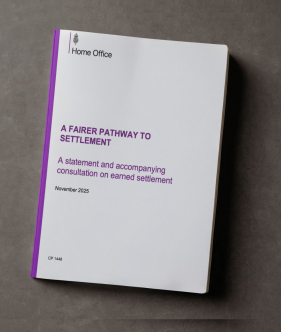
In November 2025, the UK Government published A Fairer Pathway to Settlement, a consultation setting out significant reforms to Indefinite Leave to Remain (ILR), also referred to as settlement. Building on the May 2025 Immigration White Paper, the consultation proposes an “earned settlement” model that would extend qualifying periods, introduce income thresholds and penalties linked to use of public funds, and apply changes retrospectively.
Taken together, these proposals represent a fundamental and punitive shift in how settlement is understood and accessed. They would affect hundreds of thousands of people already living and working in the UK, including Health and Care workers and others in essential roles, while introducing measures unprecedented in UK immigration policy.
At Seraphus, we believe these changes are unacceptable. In an already hostile immigration environment, the “earned settlement” approach will create further division into the deserving and non-deserving, with the so-called “good migrant” defined by wealth, privilege and arbitrary measures of contribution. This framing ignores the reality of people’s lived and entrenches inequality at the heart of settlement policy. Migration is a beneficial human right for everyone, and making settlement harder, or near impossible, will only cause harm to people who have already made the UK their home.
Our role in the consultation
Seraphus is actively engaged to ensure that the voices of migrants and frontline advisers are heard while there is still an opportunity to influence this policy.
As a result, Seraphus submitted a detailed, evidence-based response to the Home Affairs Select Committee Inquiry and provided analysis and policy recommendations to the Scottish Government to help inform its formal response.
Our submissions were grounded in a rights-based framework and draw on frontline casework, sector-wide evidence, and comparative international research. This approach allows us to assess not only the legal implications of the proposals, but also their practical and social impact on individuals, families, employers, and communities.
Importantly, we have shared these insights with organisations across the EU Settlement Scheme network and wider immigration sector to support others preparing their own responses to the consultation. Ensuring that the experiences of frontline advisors is reflected in this process is crucial, they see first-hand how policy changes translate into real-world harm.

Learn more about the consultation
Learn more about how the consultation on “earned settlement” works in this explainer from Greater Manchester Immigration Aid Unit.
Understanding the ILR proposals and their impact
The risks posed by these proposals are not abstract. They are already shaping the decisions, anxieties, and futures of the people we support every day.
The consultation sets out reforms that would fundamentally alter how settlement is accessed and experienced in the UK. Key proposals include:
- Significant extension to settlement timeline to 10+ years, including a 15-year baseline route for workers in roles below RQF Level 6, affecting most Health and Care visa holders.
- Penalty-based extensions, meaning some applicants could face settlement routes of 20–30 years.
- Retrospective application to anyone who has not yet secured settlement, impacting more than 100,000 people already on established 5-year settlement pathways.
- No Recourse to Public Funds (NRPF) after settlement, shifting access to social security from settlement to citizenship.
- Separating dependent partners’ settlement timelines, increasing the risk of prolonged family separation.
Settlement is a cornerstone of long-term security, family life, health, and workforce stability. Policies that deliberately prolong temporary status or restrict access to public funds undermine these principles and create well-documented harm. Retrospective application is particularly damaging: people who have structured their lives around the existing five-year route now face years or decades of extended uncertainty.
We see this in our day-to-day case work. Applications for settlement are a central part of our advice services and one of our key areas of expertise. Since the changes were first announced in May 2025, we have seen the significant stress clients have been under, uncertainty about whether they would be impacted, how their lives in the UK might change, and in some cases whether they will be able to remain with their partners, children and families in the UK.
To illustrate the scale of the impact: a client we are currently supporting on a five-year route expects to settle permanently in the UK in 2027 under the current rules. Under the proposed changes, that same client would not be eligible to settle permanently until at least 2032. The same applies to their family members who joined as dependants. Instead of gaining security in the UK, this family would face an additional five to seven years of uncertainty and around £32,000 of further temporary visa cost. This is not an insignificant change in policy, it is a profound financially and psychological burden.
The evidence on prolonged insecurity is clear. Long-term temporary status is associated with serious psychological harm, including higher rates of anxiety, depression, and post-traumatic stress. International comparisons show that these proposals would make the UK an extreme outlier, with significantly longer settlement routes than comparable countries. Rather than supporting the Government’s own stated aims of integration and community cohesion, the proposals risk entrenching precarity and exclusion.
Developing our recommendations
While we fundamentally disagree with the direction set in the consultation, our recommendations to both the Home Affairs Committee and the Scottish Government respond directly to the most harmful elements in the proposals. They focus on three main areas:
- Opposing retrospective application, which would unfairly and unjustifiably extend settlement timelines for people already on lawful routes. This approach is both legally and morally indefensible.
- Revising the proposed 15-year settlement route for care and other essential workers, which risks worsening workforce shortages and contradicts demographic and labour market needs.
- Introducing Scotland and devolved-specific exemptions, recognising that settlement policy should reflect local needs rather than a one-size-fits-all approach designed for England.
In our casework and our work with Scotland’s Migration Service we see first-hand how requiring workers to remain in temporary status for 15 years or more directly contradicts Scotland’s workforce strategy. Rather than reducing migration, it risks accelerating turnover, increasing exploitation, and destabilising key sectors.
The consultation forecasts approximately 1.6 million settlement grants between 2026 and 2030, based on the current five-year routes. Extending settlement timelines may delay settlement in the short term, but there is no evidence that it will reduce settlement in the long term. What it will do is prolonging insecurity after people have already made significant emotional, financial and social investments in a life in the UK.
What we are calling for and why It matters
The November 2025 consultation reveals a settlement system designed to deter and delay, rather than to support long-term integration. A complex and hostile “earned settlement” model risks entrenching inequality while failing to meet labour market, demographic, or community objectives.
Our inquiry submissions set out practical, evidence-based recommendations aimed at improving access to settlement and reducing unnecessary barriers to settlement. This work matters not only for individual applicants, but for the settlement system itself. Poorly designed settlement policy increases demand for crisis-driven advice, places additional financial pressure on applicants, and embeds long-term insecurity. By contrast, fair and accessible settlement routes support integration, workforce stability, and stronger communities.
Our contribution to this inquiry is just the first step. We will continue to challenge these proposals through ongoing policy engagement, supporting other organisations to take action and helping our clients navigate the uncertainty such policy changes create. This work is not peripheral to our advice service; it is essential to it.
By combining policy analysis, frontline evidence, and continued engagement with government, we aim to ensure that the call for a humane and stable settlement policy is heard.

Take action
Write to your MP about the Government proposal on settlement using Amnesty international’s tool.

Join the mass lobby
Challenge the “earned settlement” proposals by joining a mass lobby of parliament.

Join the workshop
If you are impacted by the possible changes the3milion is hosting a workshop going through the steps of responding to the consultation as an individual:.
Think these changes may affect your indefinite leave to remain application?
Our team of qualified immigration lawyers is here to support you through your ILR application or answer questions you may have. Contact us today to hear how we can support you on your UK immigration journey.

Read more
-

What Is Indefinite Leave to Remain (ILR) and What Does It Mean?
Written by: Aarshi Joshi
What does ILR mean? Very simply, ILR means indefinite leave to remain in the UK. If you hold indefinite leave to remain it gives you the right to live in the UK permanently. You may have heard indefinite leave to remain referred to as permanent residence in the UK. Both terms are used interchangeably, however […]Read article -

Indefinite Leave to Remain vs British citizenship: which is the better choice for long-term UK residents
Written by: Christopher Desira
For many long-term residents the choice between indefinite leave to remain (also known as ‘ILR’ or ‘settlement’) and British citizenship is crucial. At Seraphus, we understand the uncertainties of immigration statuses. This guide explains the differences, highlights the benefits and limitations of each, and offers practical information to help you make an informed decision about […]Read article -
The impact of absences on ILR applications
Written by: Christopher Desira
If you are working towards your Indefinite Leave to Remain (ILR) UK immigration status, you may already know that time spent outside the UK—even for a holiday or a business trip—might affect your ILR eligibility. The qualifying period for ILR (often 5 years but sometimes 10, depending on your route) requires a certain amount of […]Read article
Categories: Family MigrationImmigration Rights